ITINERARY · SEPTEMBER 2026
Two bases, one island: Canggu, Ubud, and a waterfall that asks something of you
How to see the two Balis in one trip — the beach and the buzz, then the jungle and the quiet — with a sacred cleansing ritual somewhere in the middle.
By The Nusa Editors
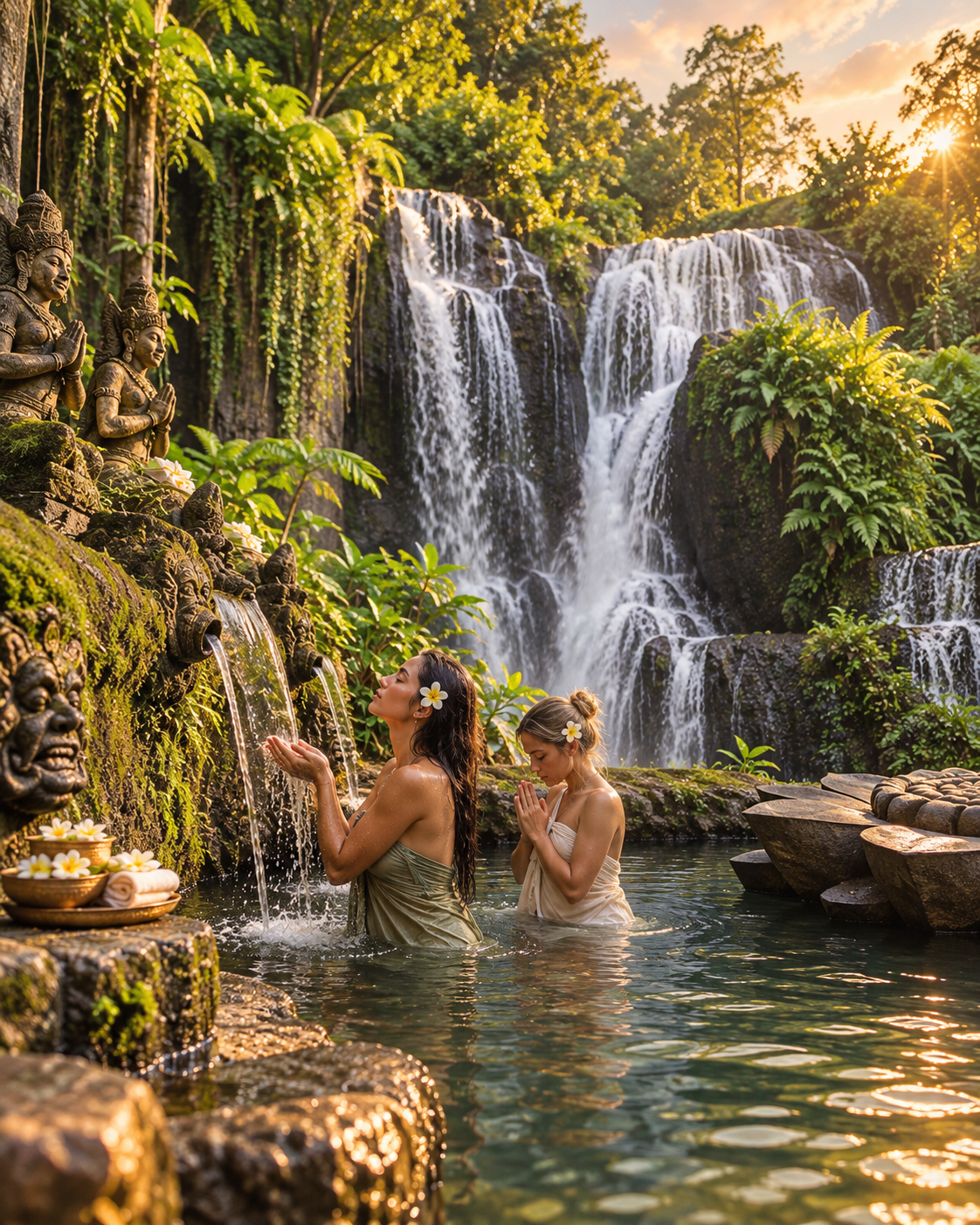
There are, roughly speaking, two Balis. There is the Bali of the coast — surf, long breakfasts, sunsets with a drink in hand, the easy social hum of Canggu. And there is the Bali of the interior — rice terraces, temples, river gorges, the slow green quiet of Ubud, where the island remembers it is one of the most spiritual places on earth.
Most people pick one. The ones who get it right do both — a few days by the sea, a few days in the hills, and a drive between them that is itself part of the holiday. Here is how we'd shape it.
Days one to three or four: Canggu, by the coast
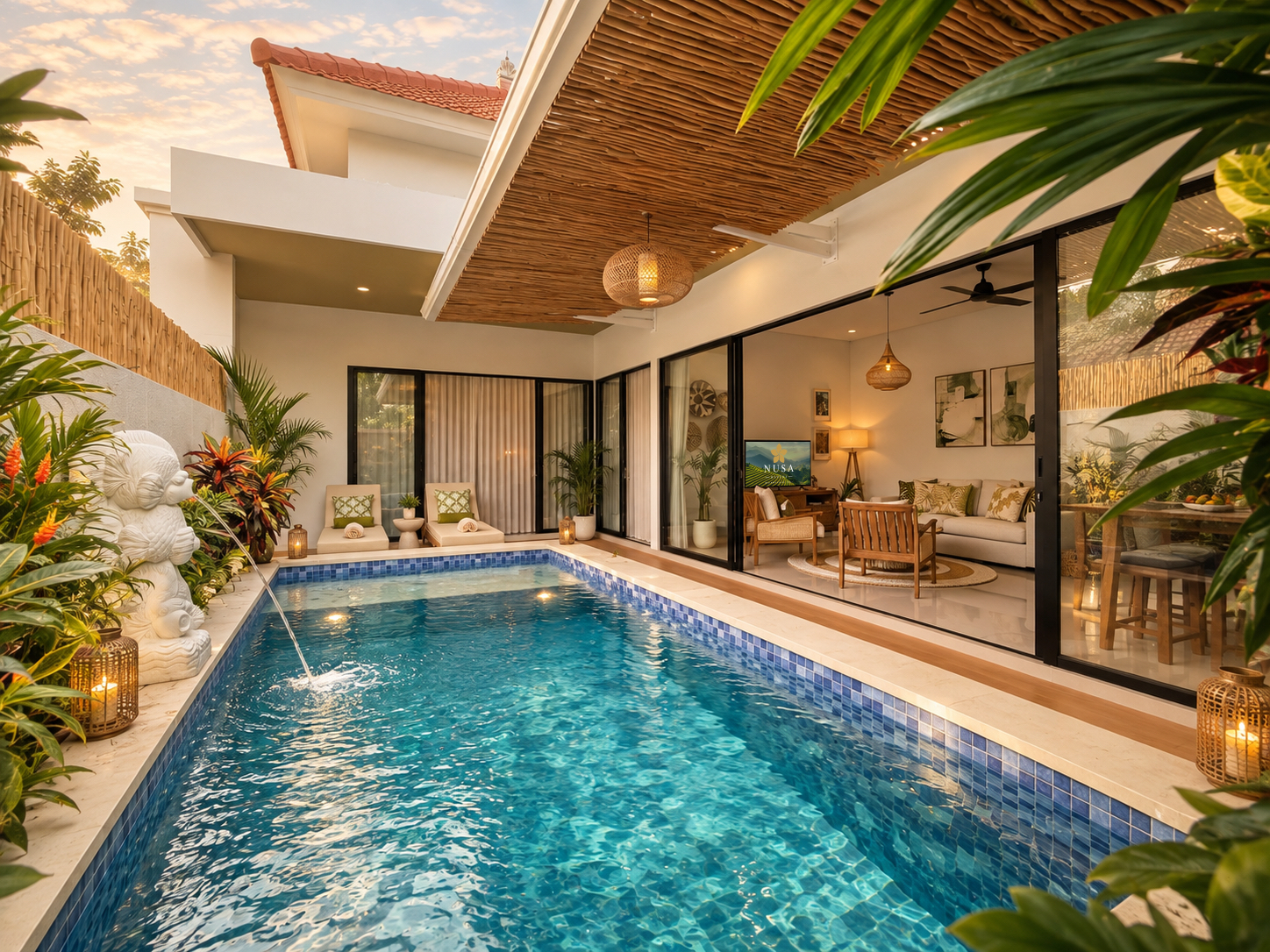
Begin where the energy is. Canggu is for mornings on the beach and evenings that stretch — Batu Bolong for the surf, the café lanes of Babakan for slow breakfasts, a sunset at a beach club when the mood takes you. Base yourself somewhere calm enough to come home to: one of our Canggu villas, with a private pool and a quiet lane, puts the whole of it a few minutes away while keeping the peace for when you want it. Our guide to A Quieter Side of Canggu is a useful companion for choosing where to spend those first days.
Spend the days unhurried. Learn to surf or watch others try. Eat well — Canggu does this better than almost anywhere in Southeast Asia. Then, when the coast has done its work, point the car inland.
The drive, and the waterfall in the middle
The road from Canggu up to Ubud takes a little under an hour, and we'd suggest breaking it with something few visitors plan for and almost all remember: a Melukat.
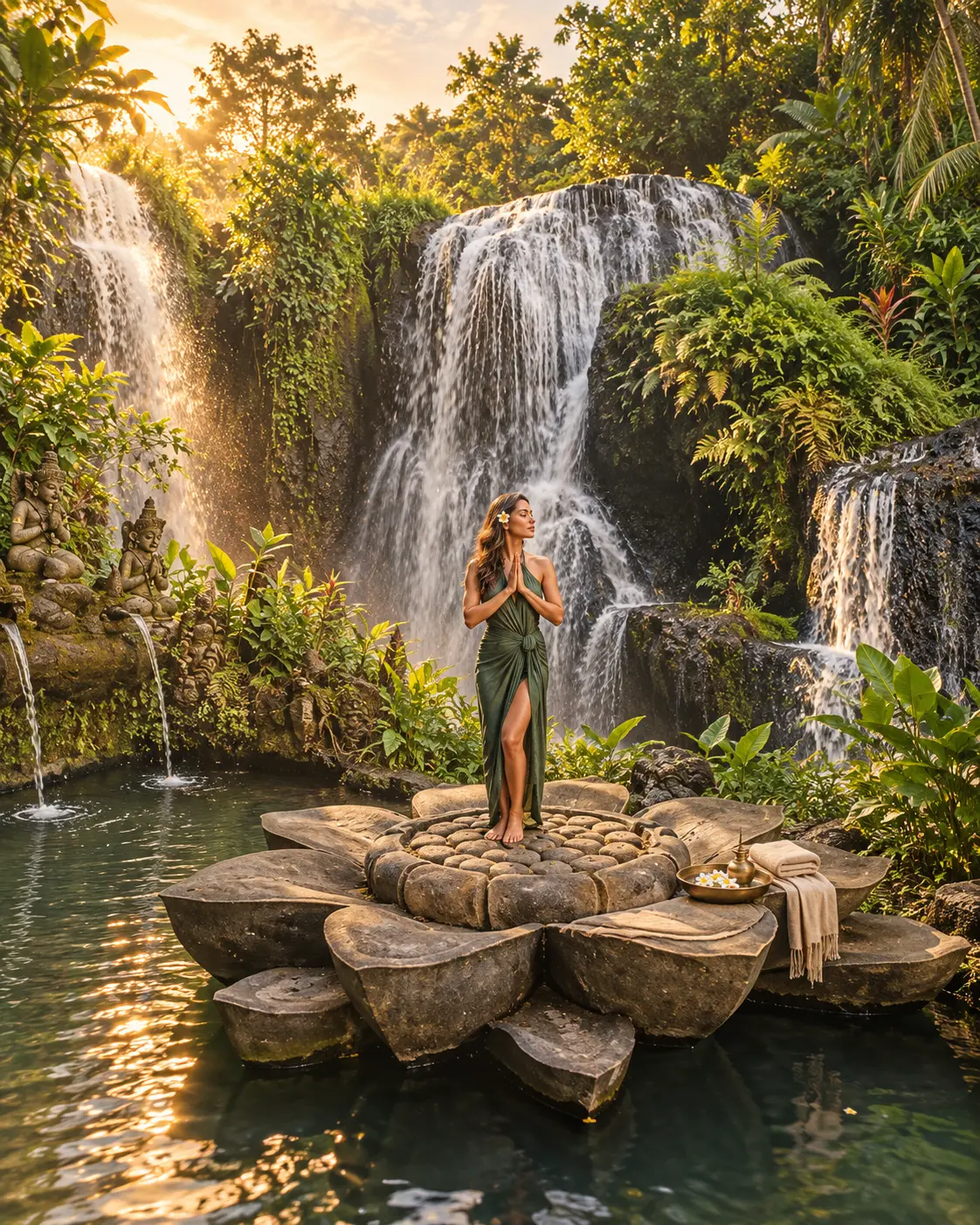
Melukat is a Balinese Hindu water-purification ritual — a cleansing not of the body but of the spirit, performed for centuries in the island's sacred springs and, at one particular place, beneath a waterfall. The word itself comes from lukat, to purify; the idea is that the soul, like the body, gathers a kind of dust from living, and must occasionally be washed clean. Balinese families do this regularly. Increasingly, respectful visitors are welcomed to as well.
The place to do it is Taman Beji Griya Waterfall, in Punggul, about halfway between Canggu and Ubud — the one sanctuary near Ubud where a natural waterfall is part of the rite. It is not a photo stop. You change into a traditional bathing sarong, make a small offering, and are led by a guide through a sequence that ends standing beneath the falling water itself — where you are quietly encouraged to let something go. Grief, stress, an old anger. People cry. People laugh. Most come out lighter than they went in, and a little surprised by it.
A few honest notes, because this is a working place of worship and arriving prepared is part of the respect it asks:
Wear swimwear under the sarong the temple provides; ordinary clothes aren't worn in the sacred water.
In keeping with Balinese Hindu tradition, women who are menstruating do not enter the sacred water. This is observed strictly, and without exception.
The ritual involves cold water, some uneven steps and a short walk through the canyon — wear something with grip, and come willing to be led.
Go with an open, unhurried heart. The guides are generous; the ritual gives most to those who give themselves to it.
A private, early-morning ceremony outside public hours can be arranged through the temple directly, which is the quieter and more solemn way to do it. Your Villa Hostess can help coordinate a driver and the timing.
Days four or five onward: Ubud, in the hills
Arrive in Ubud still a little damp and a little changed, and the town makes immediate sense. This is Bali's cultural and spiritual heart — yoga at dawn, the Campuhan ridge before the heat, the Monkey Forest's old temples, rice terraces at Tegallalang, the galleries and the long healthy lunches. Base yourself in the green quiet of a village like Sayan, a few minutes from the centre — our Ubud joglo villa sits exactly there, among the trees, with a koi pond and the sound of water, which after a Melukat feels less like a coincidence and more like the right place to land. Read Ubud, the quiet way for the slower version of these days.
Spend these days slower. Ubud rewards it. A spa afternoon, a water-temple visit, a sunrise walk, and the growing sense — the one this island gives people if they let it — that you have come somewhere that runs deeper than a holiday.
Woven through both: the ritual at home
And on the evenings you'd rather not move at all, the wellness comes to you. At every Nusa Havens villa, coast or hills, Ibu Nenek — a Balinese master therapist carrying sixty years of healing — brings her in-villa ritual into the privacy of your own pavilion. Inside the Ibu Nenek Ritual, we tell the story of the healing lineage behind it. The waterfall cleanses the spirit; her hands rest the body. Between them, you go home a different shape than you arrived.
That is the trip worth taking: two bases, two Balis, and a waterfall in the middle that asks something of you — and gives more back. If the island is calling you farther, Nusa Penida, honestly is the natural next chapter.
Base your stay with Nusa Havens — a private-pool villa in Canggu, a joglo retreat in Ubud, and a Villa Hostess to help shape the days between.
Continue reading
Destination · October 2026
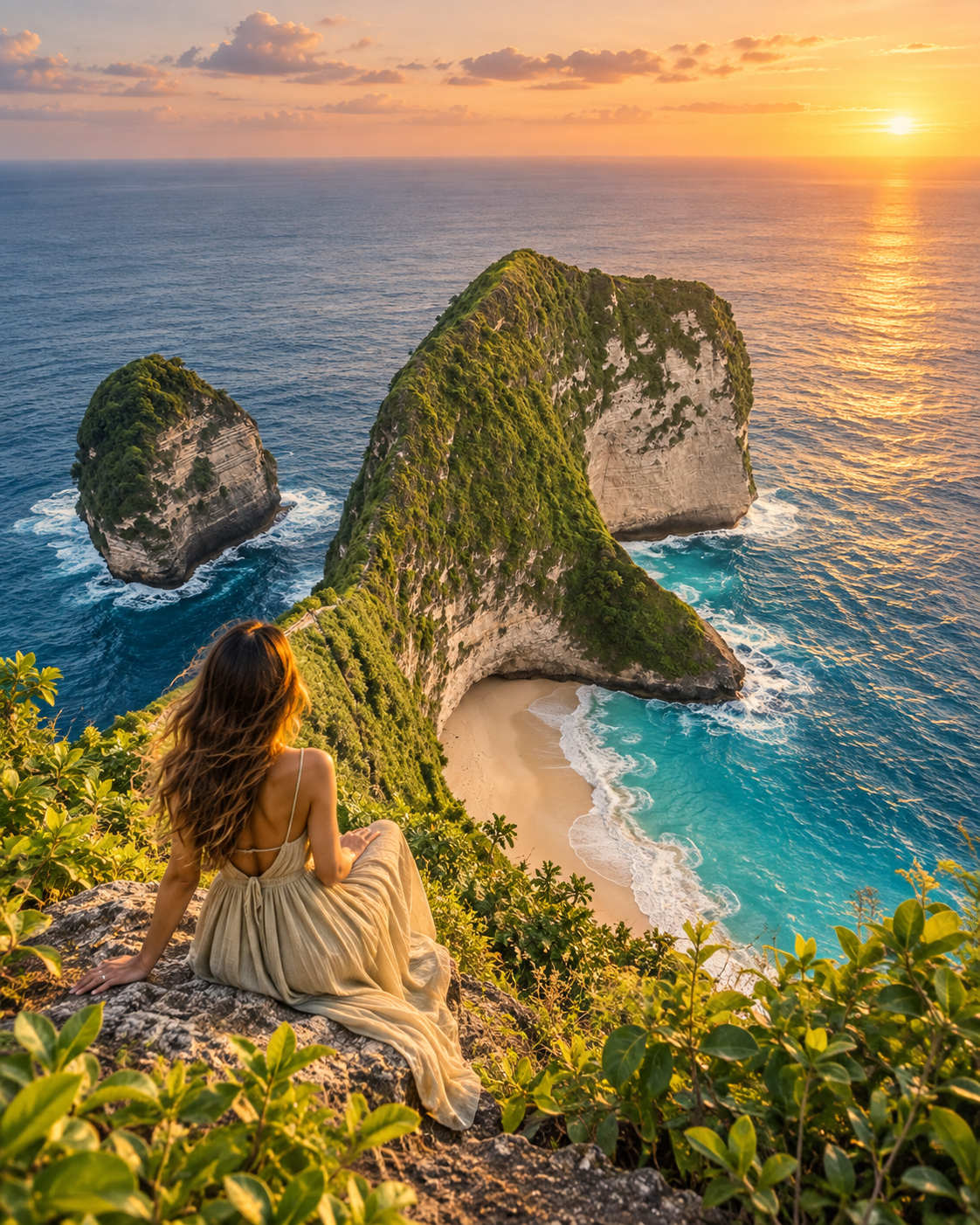
Nusa Penida, honestly: the most beautiful day trip in Bali, and how not to ruin it
The cliffs are real. So are the crowds, the currents and the roads. Here's how to see the best of it — and why a night might beat a day.
Island Living · August 2026
Sun, shade, and the art of staying cool in Bali
Why the smartest thing in a tropical villa is sometimes the roof over the terrace.
Food & Drink · July 2026
Where Canggu actually eats
Past the Instagram brunch queues, the food that keeps people here.