
DESIGN · APRIL 2026
Quiet Luxury in Bali
A case for fewer rooms, more space, and hospitality that never needs to raise its voice.
By The Nusa Editors

There is a moment on most luxury holidays when you realise you are performing one.
It arrives at breakfast, usually. A buffet the length of a tennis court. A member of staff stationed at the entrance whose only job is to say good morning. Somewhere, a speaker playing music chosen by a committee. Everything is expensive and nothing is quiet.
Bali has a great deal of this. It also, if you look slightly to one side of it, has the opposite.
What quiet luxury actually means
The phrase has been worn thin by fashion, where it mostly means an expensive jumper without a logo. In hospitality it means something more useful: luxury that does not require an audience.
A resort, by its nature, is a public place. You are among other guests. There is a lobby to cross, a dress code to intuit, a sun lounger to claim. None of it is unpleasant — but all of it asks something of you, and what most people actually want from a holiday is to be asked for nothing at all.
Quiet luxury is the version where the gate closes behind you and the day is entirely yours. Where the pool is not shared. Where you can eat at four in the afternoon, swim in what you like, and speak to nobody if that is the mood.
Fewer rooms, more space
The economics of a large resort push in one direction: more keys, more covers, more turnover. The economics of a small villa collection push the other way. We have fourteen villas in Bali. We could have forty. The reason we do not is that the thing we are selling is space and attention, and both are finite.
A villa that sleeps six on its own grounds is a different product from a suite that sleeps six inside a building with two hundred other people. Not better in every way — a resort will always have more restaurants — but better at the specific thing most guests come to Bali for.
Hospitality that does not announce itself
The tell of a truly good stay is what you do not notice.
You do not notice that the fridge was stocked with the water you drank yesterday rather than the one you did not. You do not notice that the towels by the pool were replaced while you were at lunch. You do not notice that the person who let you in on the first afternoon has quietly learned that you take your coffee at seven.
This is the argument for a Villa Hostess rather than a reception desk. One person, who knows your name, who is a message away and otherwise invisible. Service you have to ask for is a transaction. Service that arrives before you ask is hospitality.
The Balinese version
There is a local grammar to this that is worth naming. Balinese hospitality is not effusive. It is attentive, unhurried and slightly formal in a way that reads, to a European visitor, as enormous grace. The offering placed at the gate each morning is not for guests. The temple across the lane will not be explained to you unless you ask.
A stay here is better when it lets that be what it is, rather than staging it. Frangipani on the pillow because frangipani grows in the garden. A blessing thread at farewell because it means something, not because it photographs well.
What to look for
If quiet is what you are after, the signals are reasonably reliable. A private pool rather than a shared one. A named person rather than a front desk. Fewer photographs of the bar and more of the light. And a location one road back from wherever the noise is — the difference between Canggu's main strip and a lane in Padonan is fifteen minutes and an entirely different holiday.
The best compliment we receive is not that a stay was impressive. It is that guests slept properly, ate slowly, and did rather less than they had planned. That idea continues in Why Villa Stays Are the Future of Wellness, becomes tangible in A Quieter Side of Canggu, and is designed for the climate in Sun, shade, and the art of staying cool in Bali.
A collection of private-pool villas across the quieter edges of Canggu.
Continue reading
Destination · October 2026
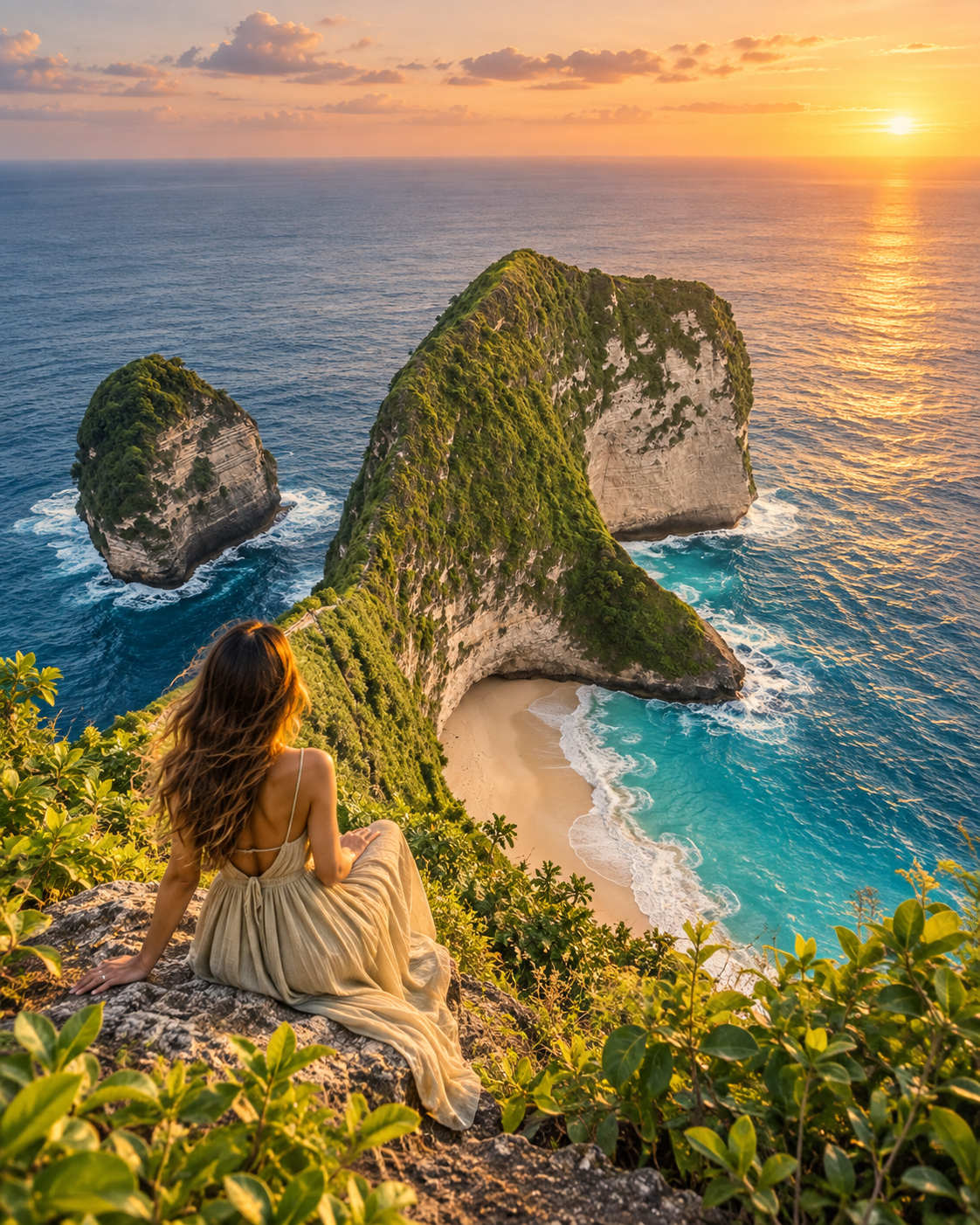
Nusa Penida, honestly: the most beautiful day trip in Bali, and how not to ruin it
The cliffs are real. So are the crowds, the currents and the roads. Here's how to see the best of it — and why a night might beat a day.
Itinerary · September 2026
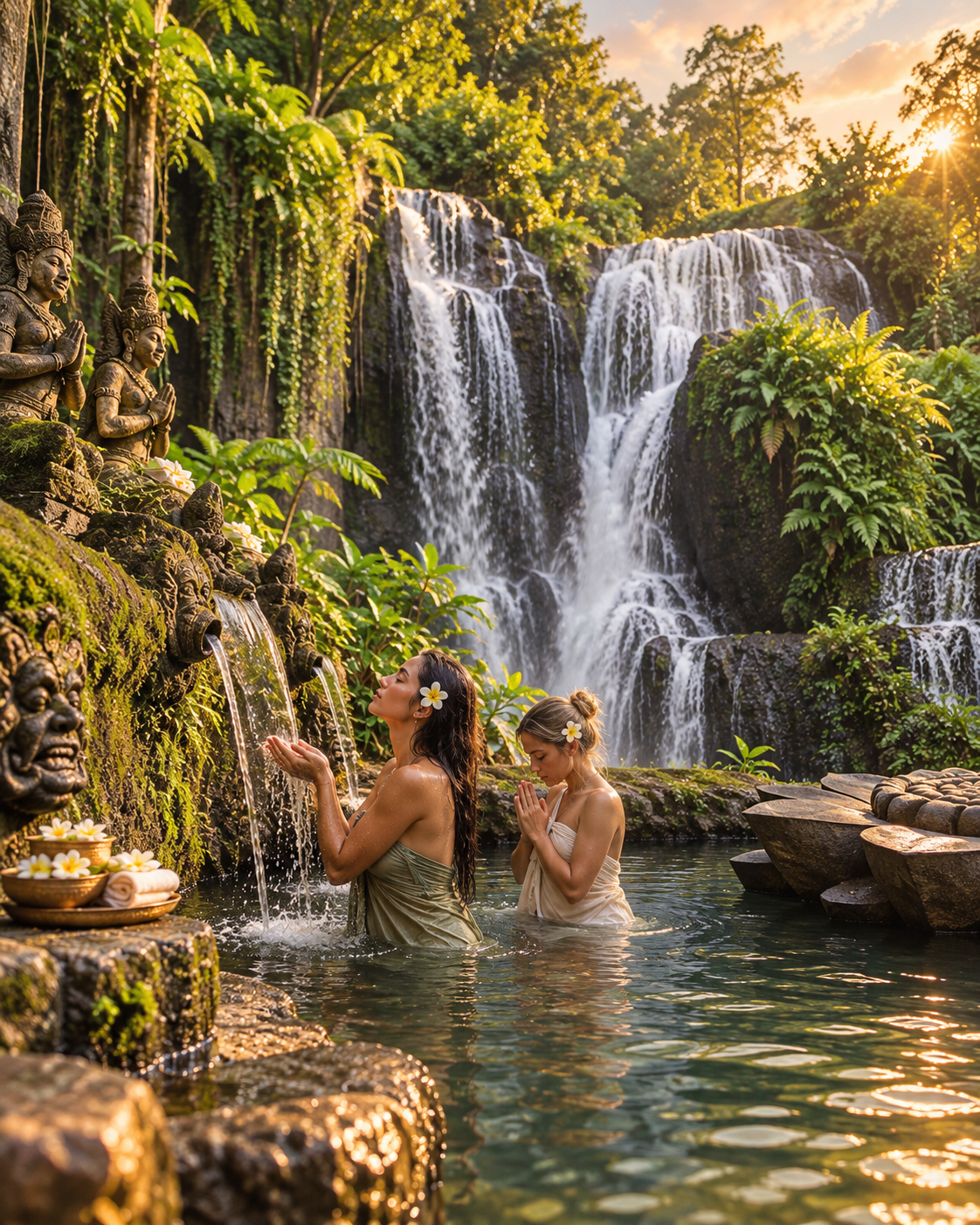
Two bases, one island: Canggu, Ubud, and a waterfall that asks something of you
How to see the two Balis in one trip — the beach and the buzz, then the jungle and the quiet — with a sacred cleansing ritual somewhere in the middle.
Island Living · August 2026
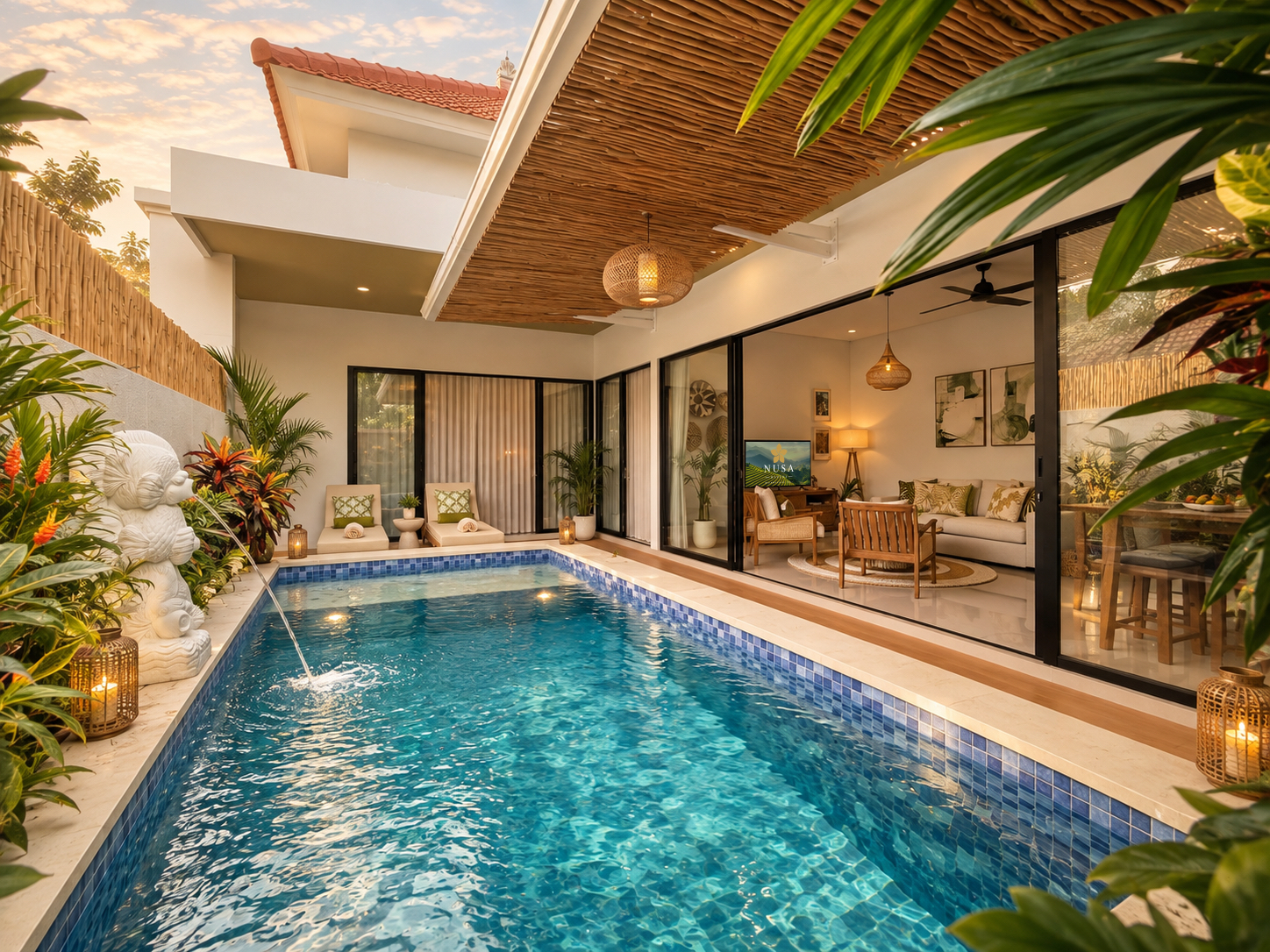
Sun, shade, and the art of staying cool in Bali
Why the smartest thing in a tropical villa is sometimes the roof over the terrace.